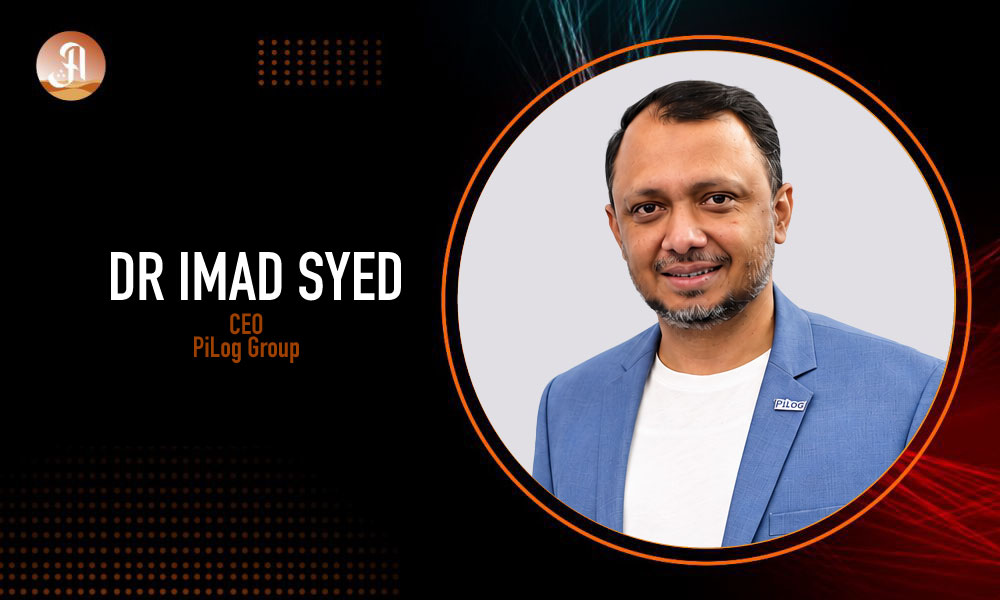
In a world increasingly driven by automation, algorithms, and artificial intelligence, Dr. Imad Syed, CEO of PiLog Group, has built a leadership philosophy rooted in a deeper truth: technology alone does not transform organizations people do. But true leadership, according to him, requires more than surrounding yourself with people who simply listen, agree, or follow instructions. It requires building teams that challenge assumptions, ask better questions, and collectively create smarter solutions.
Over the past three decades, PiLog Group has evolved into a global force in data governance, enterprise transformation, and AI-driven innovation by focusing not only on systems and technologies, but on the human decisions behind them. Whether addressing duplicate supplier records that delayed critical payments, inconsistent equipment classifications causing operational downtime, or complex regulatory reporting challenges, Dr. Syed recognized that every business problem ultimately connects back to people procurement officers, engineers, analysts, compliance teams, and the decisions they make every day.
This people-centric mindset became the foundation of PiLog’s approach to digital transformation.
Under Dr. Syed’s leadership, technology is never viewed as a replacement for human intelligence, but as an extension of it. Artificial intelligence, automation, and enterprise data systems are designed to free people from repetitive operational burdens so they can focus on innovation, strategy, and better decision-making. The result is a powerful and continuously evolving cycle where people teach the machine, and the machine empowers people to think further, move faster, and create greater value.
What makes his vision particularly impactful is his understanding that transformation is never static. Regulations evolve, industries shift, data sources multiply, and organizations grow more complex over time. For this reason, Dr. Syed emphasizes governed innovation a balance between relentless curiosity, uncompromising data integrity, regulatory transparency, and continuous learning.
At PiLog Group, success is measured not by technology alone, but by outcomes that genuinely improve human and organizational performance: reduced invoice processing times, fewer equipment failures, higher forecasting accuracy, improved compliance, and stronger operational trust.
As PiLog marks nearly three decades of turning raw information into trusted enterprise intelligence, Dr. Imad Syed continues to champion a future where automation remains people-first, innovation remains accountable, and leadership remains grounded in empowering individuals rather than replacing them.
For him, the future of AI and digital transformation is not simply about smarter systems it is about creating smarter organizations built around people, trust, and meaningful progress.
Driving Intelligent Enterprises Through Trusted Data, AI-Augmented Governance, and People-First Innovation
As PiLog Group celebrates three decades of innovation and enterprise transformation, Dr. Imad Syed, CEO of PiLog Group, reflects on the journey that first inspired both his personal passion and the company’s long-standing commitment to data governance, digital transformation, and intelligent enterprise solutions.
When Dr. Syed first entered the technology industry during the mid-1990s, data was widely viewed as a secondary by-product of business operations rather than a strategic organizational asset. While working on early ERP implementations, he witnessed firsthand how fragmented master data created duplicated efforts, operational inefficiencies, compliance risks, and missed business opportunities. This realization became the catalyst that drove him to explore data governance not as a technical afterthought, but as a foundational business discipline capable of transforming enterprise performance.
According to Dr. Syed, digital transformation today is no longer simply about deploying advanced software platforms. Instead, success depends on whether those platforms are powered by reliable, governed, and high-quality data. Whether organizations pursue AI-driven analytics, IoT-enabled asset management, predictive maintenance, or cloud-based ERP migrations, the quality of underlying data ultimately determines the effectiveness of transformation initiatives. PiLog’s end-to-end suite spanning data creation, enrichment, validation, governance, and lifecycle management provides enterprises with the confidence to innovate rapidly while remaining compliant with evolving global regulations such as GDPR, Saudi Arabia’s PDPL, and numerous industry-specific mandates.
At the center of Dr. Syed’s leadership philosophy is the belief that leadership in the AI era must be driven by a clear and future-oriented vision. PiLog’s original vision, articulated in 1994, focused on transforming chaotic enterprise data into a strategic asset. Over time, this vision evolved into enabling intelligent enterprises through trusted data and AI-augmented governance. Under his leadership, this long-term vision has been translated into measurable objectives, including reducing ERP migration cycles through AI automation, expanding multilingual taxonomy libraries, and securing globally recognized certifications and strategic partnerships.
Dr. Syed also strongly advocates for data-centric decision-making, emphasizing that artificial intelligence can only be as effective as the quality of the data supporting it. Through PiLog’s iVision Business Technology Platform and its end-to-end lifecycle modules covering acquisition, harmonization, governance, transformation, and analytics the company institutionalizes data quality metrics such as accuracy, completeness, and conformity while embedding real-time validation directly into operational workflows.
In a highly regulated global environment, PiLog has also pioneered an approach Dr. Syed describes as “agile governance.” By combining ISO-based governance frameworks with automated policy enforcement and machine-readable compliance rules, PiLog enables enterprises to innovate quickly while ensuring transparency, auditability, and regulatory compliance remain intact.
Dr. Syed also believes that sustainable innovation depends heavily on cultivating a continuous learning culture. PiLog invests extensively in internal academies, certification pathways, knowledge-sharing systems, and academic partnerships designed to strengthen organizational expertise and accelerate knowledge transfer across global teams and projects.
As PiLog enters its next chapter, Dr. Imad Syed’s vision remains focused on one enduring principle: turning trusted data into intelligent enterprise value while ensuring that technology continues to empower people, strengthen governance, and drive meaningful business transformation worldwide.
Building Trusted AI, Governed Innovation, and Human-Centered Digital Transformation Across Global Enterprises
As PiLog Group marks three decades of transforming data into a strategic enterprise asset, the company’s journey stands as a reflection of disciplined innovation, ethical governance, and a long-standing commitment to building trusted digital ecosystems. Under the leadership of Dr. Imad Syed, CEO of PiLog Group, the organization has evolved from a modest startup founded in 1996 into a globally recognized leader in data quality, governance, AI-enabled master data management, and enterprise transformation.
For Dr. Syed, responsible innovation also extends to resource discipline. PiLog’s subscription-based and usage-transparent delivery model allows clients to clearly measure AI consumption, operational value, and long-term business impact. This visibility discourages wasteful experimentation and ensures that innovation investments remain strategically aligned with measurable organizational outcomes.
Today, as PiLog celebrates thirty years of global growth and enterprise innovation, Dr. Imad Syed continues leading the company with a philosophy rooted in balanced transformation where technology serves people, governance strengthens innovation, and trusted data remains the foundation of intelligent enterprise success.
Reinventing Enterprise Data Governance Through AI, Trust, Compliance, and Intelligent Automation
As enterprises continue accelerating toward AI-driven digital transformation, the challenge is no longer simply collecting data it is ensuring that data remains trusted, governed, secure, and instantly usable across increasingly complex global ecosystems. According to Dr. Imad Syed, CEO of PiLog Group, modern enterprises require far more than conventional data quality tools to navigate today’s interconnected business environment.
Complementing iMDRM is PiLog’s iDQM platform, which extends AI-driven governance directly into enterprise data quality management. Dr. Syed emphasizes that data quality is not a one-time cleanup initiative but a continuous operational process that must evolve alongside transactions, IoT sensor feeds, cloud integrations, and third-party data imports.
According to Dr. Syed, the true strength of PiLog’s ecosystem emerges when iMDRM and iDQM operate together within the broader iVision platform. While iDQM ensures that incoming enterprise data meets the highest quality standards, iMDRM governs who can access, modify, or distribute that data throughout its lifecycle. This integrated governance loop eliminates one of the most common enterprise data failures the “clean once, protect never” problem that often undermines traditional MDM initiatives.
Reflecting on PiLog’s 30-year journey, Dr. Imad Syed notes that when the company was founded in 1996, the primary challenge involved creating a single source of truth across a handful of on-premise ERP systems. Today, enterprises operate in an environment defined by SaaS platforms, cloud-native infrastructures, edge devices, AI-driven decision engines, and globally distributed operations. While opportunities have expanded dramatically, so too have governance risks and regulatory expectations.
For this reason, iMDRM and iDQM represent what Dr. Syed describes as the natural evolution of PiLog’s original mission: transforming enterprise data into a trusted, governed, compliant, and future-ready strategic asset capable of supporting the next generation of intelligent enterprise transformation.
Celebrating three decades of transforming data into a strategic enterprise asset, Dr. Imad Syed’s core message to global enterprises remains both simple and profound: when data is governed with integrity, enhanced through artificial intelligence, and delivered through a trusted platform, it becomes the defining catalyst for sustainable digital transformation.
Driving Trusted AI Governance Through Data Integrity, Intelligent Automation, and Scalable Enterprise Transformation
Reflecting on PiLog’s journey since its founding in 1996, Dr. Syed emphasizes that the challenge of creating a single source of truth for enterprise master data remains just as relevant today as it was three decades ago. While technology has evolved dramatically, the underlying principle has not changed without disciplined governance, even the most advanced AI systems risk generating inaccurate insights, compliance failures, operational inefficiencies, and costly rework.
According to Dr. Syed, PiLog’s longstanding values honest communication, confidentiality, accountability, fairness, and responsible resource utilization continue to serve as the ethical and operational foundation of the company’s governance philosophy. These principles are not treated as corporate slogans but as critical safeguards that ensure enterprise data remains reliable, secure, compliant, and fit for strategic decision-making. He consistently advocates that governance should no longer exist as a reactive audit mechanism but as a continuous, automated process embedded directly into data creation and operational workflows.
At the center of PiLog’s AI-driven transformation strategy is the belief that artificial intelligence must function as an enabler rather than a replacement for human judgment. Dr. Syed frequently stresses that AI systems are only as trustworthy as the quality of the data they consume. PiLog’s AI Lens platform exemplifies this philosophy by applying intelligent automation to strengthen governance in real time. The platform validates incoming records against the iContent Foundry’s repository of over 25 million multilingual industry taxonomies, identifies anomalies, and recommends corrective actions before flawed data reaches downstream systems.
Dr. Syed also highlights the strategic importance of integrated governance ecosystems. PiLog’s iVision Business Technology Platform unifies every stage of the enterprise data lifecycle including acquisition, harmonization, governance, transformation, and analytics within a single, scalable architecture. Solutions such as iMDRM (Intelligent Master Data Rights Management) and iDQM (Intelligent Data Quality Management) demonstrate how organizations can simultaneously enforce data rights, maintain continuous quality standards, and align governance with ISO-certified frameworks using one cohesive platform.
One of the most transformative shifts identified by Dr. Syed is the evolution from reactive compliance management toward proactive value creation. Traditionally, compliance was treated as a periodic exercise driven by manual reviews and static documentation. PiLog has fundamentally redefined this model through its “Policy as Code” governance engine, which translates GDPR, Saudi PDPL, ISO 8000, ISO 14224, and industry-specific regulations into machine-readable rules enforced automatically throughout enterprise systems.
Despite the increasing sophistication of automation, Dr. Syed strongly believes that human stewardship remains indispensable within modern AI governance ecosystems. Rather than eliminating governance professionals, PiLog’s self-learning AI systems enhance their impact by reducing repetitive manual tasks and allowing data stewards to focus on strategic responsibilities such as taxonomy enrichment, governance policy refinement, and exception management.
When addressing executives, CIOs, and digital transformation leaders, Dr. Syed often frames PiLog’s vision around three measurable pillars: speed, trust, and scalability.
Together, these pillars form what Dr. Syed describes as a blueprint for sustainable digital growth an operational model where governance, AI, and enterprise transformation evolve together rather than independently.
As a final message to organizations embarking on digital transformation journeys, Dr. Syed encourages leaders to begin by auditing their “data DNA” conducting rapid assessments of master data quality, governance maturity, and AI readiness. He also advocates adopting a “Governance as Code” mindset, where every regulatory and operational policy is translated into executable governance logic enforced directly by enterprise systems.
According to Dr. Syed, when these principles are implemented together, organizations move beyond simply reacting to data challenges and instead position governed, AI-enabled data as a long-term engine for sustainable growth, intelligent decision-making, and competitive advantage.
Building Intelligent Enterprises Through Human-Centric Governance, Trusted Data, and AI-Driven Collaboration
As PiLog celebrates 30 years of transforming enterprise data into a trusted strategic asset, Dr. Imad Syed continues to emphasize a principle that has guided the company since its earliest days: technology must begin with human needs, not technological trends.
Reflecting on PiLog’s first master data governance projects in the mid-1990s, Dr. Syed explains that every initiative started with a simple but critical question what business problem are people actually experiencing? Whether organizations struggled with duplicate supplier records delaying payments, inconsistent equipment classifications causing unplanned downtime, or fragmented customer data affecting operational efficiency, the underlying issue always centered around human decision-making and the daily challenges faced by procurement teams, plant engineers, finance analysts, and operational leaders.
This human-first philosophy remains deeply embedded within PiLog’s approach to digital transformation today. According to Dr. Syed, technology only creates lasting value when it is directly connected to meaningful business outcomes such as faster invoice processing, more reliable maintenance scheduling, improved demand forecasting, and reduced operational risk. By focusing on these tangible outcomes rather than chasing technological hype, PiLog ensures that AI, automation, and governance initiatives remain practical, relevant, and measurable.
Central to this vision is PiLog’s belief that governance acts as the essential bridge between humans and machines. Dr. Syed emphasizes that automation can only be trusted when the data powering it is accurate, governed, compliant, and transparent. PiLog’s iVision Business Technology Platform was designed around this principle, embedding governance into every stage of the enterprise data lifecycle including acquisition, harmonization, governance, transformation, and analytics.
Within the platform, governance policies are transformed into machine-readable rules through PiLog’s “Policy as Code” framework. These rules automatically enforce global standards such as ISO 8000, GDPR, Saudi Arabia’s PDPL, and numerous industry-specific regulations. Because the governance logic remains visible, explainable, and auditable, users understand why data changes are accepted, rejected, or flagged. This transparency, according to Dr. Syed, is what builds organizational confidence in AI-driven systems and automated decision-making.
PiLog’s AI Lens technology further strengthens this collaboration between humans and intelligent systems. The platform validates incoming records in real time against the iContent Foundry’s repository of more than 25 million multilingual industry taxonomies, identifies anomalies, and recommends corrective actions with clearly explainable reasoning. Rather than forcing users to trust opaque AI outputs, the system allows individuals to review, adjust, or confirm recommendations creating what Dr. Syed describes as a collaborative interaction between human expertise and machine intelligence.
Another core element of PiLog’s philosophy is simplicity and usability. Dr. Syed strongly believes that even the most advanced analytics engine becomes ineffective if business users cannot easily navigate or understand it. For this reason, PiLog focuses heavily on intuitive interfaces, preconfigured industry content, conversational AI assistance, and user-friendly dashboards that guide employees through governance and data quality processes naturally within their daily workflows.
Importantly, Dr. Syed does not view AI as a replacement for human expertise but as a mechanism for amplifying it. PiLog’s AI Lens and iMirAI conversational agents function as intelligent copilots rather than autonomous decision-makers. They surface anomalies, recommend classifications, suggest master data entries, and automate repetitive tasks, but qualified data stewards and subject matter experts always retain final authority over governance decisions.
For example, when a maintenance engineer uploads a new equipment record, the system can automatically classify the asset using PiLog’s multilingual ontologies, validate serial numbers, identify duplicate entries, and recommend warranty details. However, the engineer still reviews the suggestions, incorporates site-specific insights, and approves the final record. According to Dr. Syed, this balance preserves accountability, supports regulatory compliance, and ensures that valuable human experience remains embedded within enterprise operations.
This continuous feedback loop transforms governance from a static control mechanism into what Dr. Syed describes as a living, intelligent partnership that evolves alongside the organization itself.
For Dr. Syed, the ultimate success of any technology initiative must always be measured in human terms rather than technical complexity. PiLog equips enterprises with KPI and KRA dashboards that directly connect governance improvements to measurable business outcomes including reduced invoice processing times, fewer equipment failures, improved forecast accuracy, lower audit costs, and faster regulatory reporting.
When finance leaders observe a significant reduction in duplicate vendor records, for example, they can directly connect that improvement to faster month-end closures, improved operational efficiency, and reduced compliance burdens. According to Dr. Syed, these are the outcomes that truly validate technology alignment.
Looking back on PiLog’s 30-year journey, Dr. Syed notes that the company originally set out simply to make master data reliable. Today, however, reliable data has become the foundational prerequisite for AI, analytics, automation, and autonomous enterprise operations.
As PiLog enters its next chapter, the company’s message to enterprises remains clear: organizations that invest in human-centric data governance, transparent AI systems, continuous learning, and operational simplicity will not only adapt to the future of intelligent automation but will lead it. In Dr. Syed’s view, when governance, AI, and human expertise evolve together, the benefits extend far beyond technology they elevate the entire enterprise ecosystem.
Governed Innovation: Building the Future of AI-Driven Enterprise Intelligence
For Dr. Imad Syed, leadership has never been about simply adopting the latest technology — it has always been about creating systems where trust, intelligence, and human expertise work together in harmony.
As the driving force behind PiLog Group, Dr. Syed has spent three decades transforming raw, fragmented enterprise information into governed, strategic business value. What began in the mid-1990s as a mission to solve duplicated records and disconnected systems has evolved into a global movement redefining how enterprises approach AI, data governance, and digital transformation.
At a time when organizations worldwide are racing toward AI adoption, Dr. Syed advocates for something deeper than technological acceleration — governed innovation. He believes the future belongs to enterprises that combine relentless curiosity with uncompromising data integrity, ethical AI practices, and people-centric design. Through platforms like AI Lens, iVision, iMDRM, and iDQM, he has championed systems that make AI explainable, auditable, scalable, and aligned with human needs.
Today, as PiLog celebrates 30 years of enterprise transformation, Dr. Imad Syed stands at the forefront of a new era — one where data is no longer a by-product of operations, but the most strategic asset an organization can possess.